The Great Filter
Concept
The Great Filter is a speculated answer to the Fermi paradox — the idea that somewhere between the emergence of life and interstellar civilization, there is a barrier almost no species crosses. The subject matter aligned naturally with the early internet around 1995: a period when people were genuinely figuring out what the medium could be, with no template, no optimization, no data telling them what worked. That era had a quality of authentic first-attempt energy that the web has largely stopped producing.
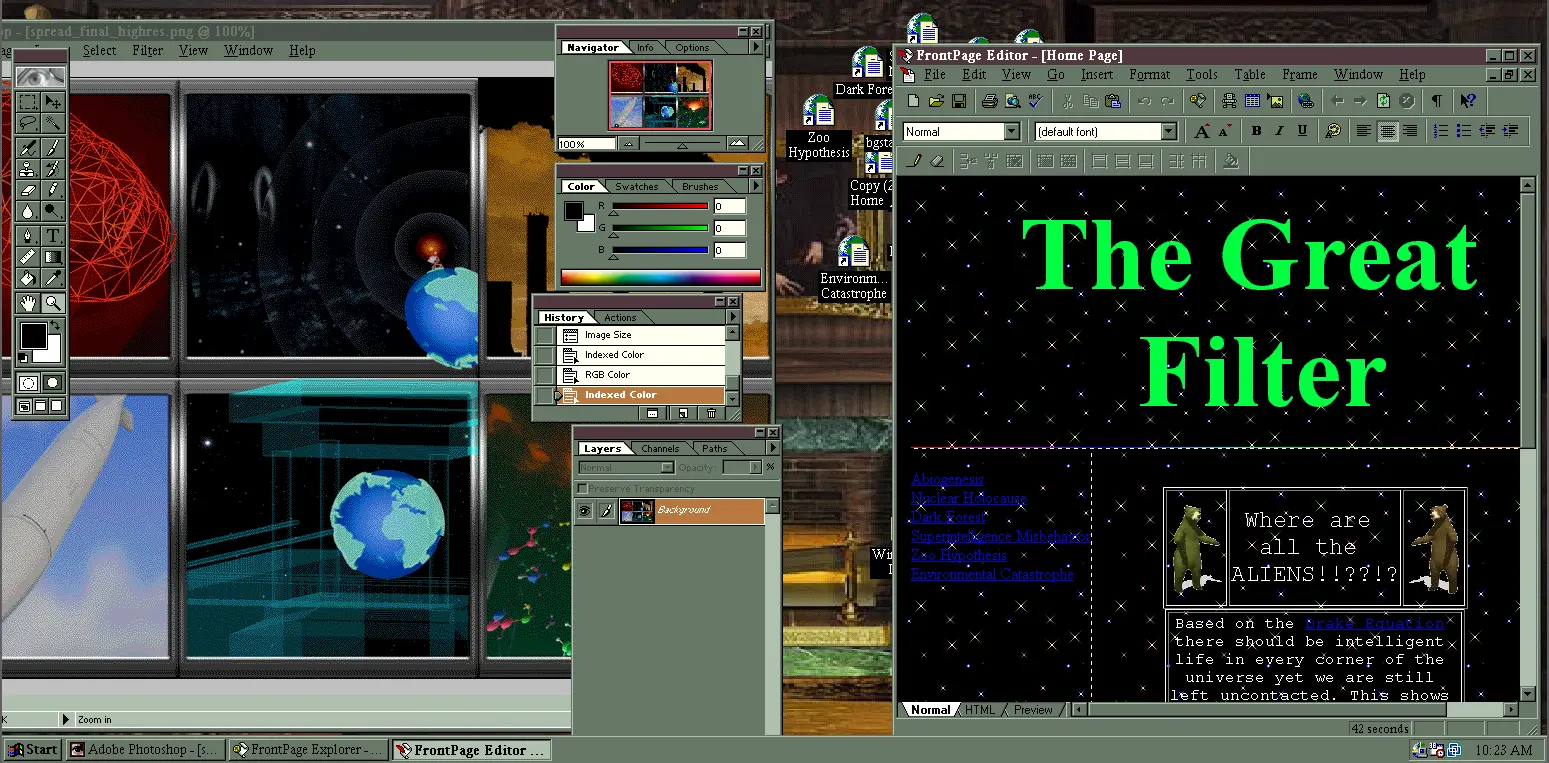
I'm drawn to the rawness of initial attempts — rough drafts often contain the most original and heartfelt ideas precisely because they haven't been corrected toward an audience yet. The decision to build the site in FrontPage 98 on a Windows 95 virtual machine wasn't nostalgia or costume. It was using the actual tools of that moment to make something that carries its actual frequency. The dithered images, the starfield background, the hyperlink color scheme — none of it is recreated. It's documentary. The medium is the argument: a cosmological concept about civilizations destroying themselves before reaching their potential, rendered inside the interface of an era that felt like the beginning of everything.
Process
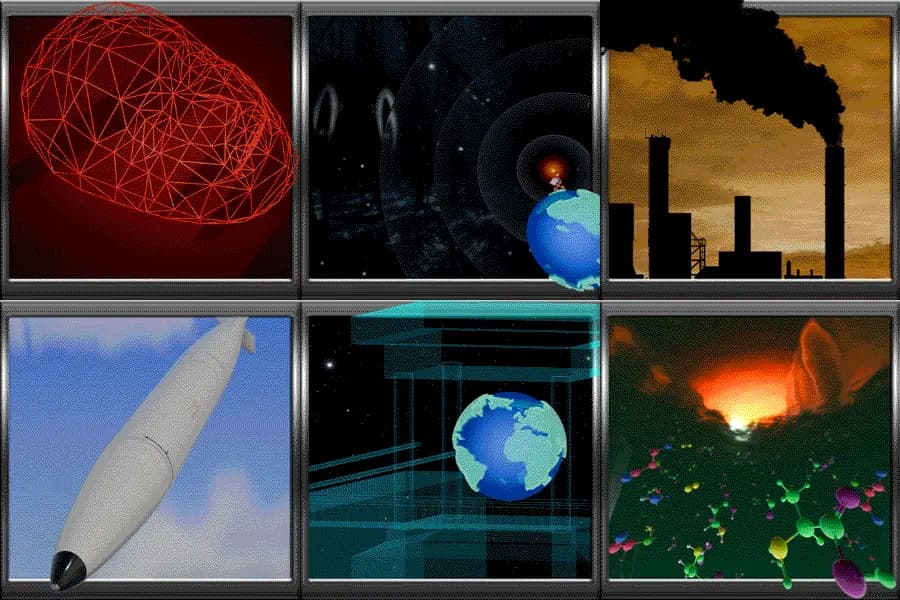
All images were produced in Blender. For Nuclear War I taught myself UV texturing to build the model. For Abiogenesis I researched which molecules would have been present in the primordial ocean of early Earth, built scientifically accurate models using MolView, and cleaned them up in OpenBabel. Each piece expanded my knowledge of not just Blender, but the subject matter itself.
The Blender renders were taken into Photoshop 5.0 — installed on the Windows 95 virtual machine — where they were sized and dithered. The website was built in Microsoft FrontPage 98, also on the VM. The files were exported, then edited for mobile compatibility and uploaded.
Exhibition
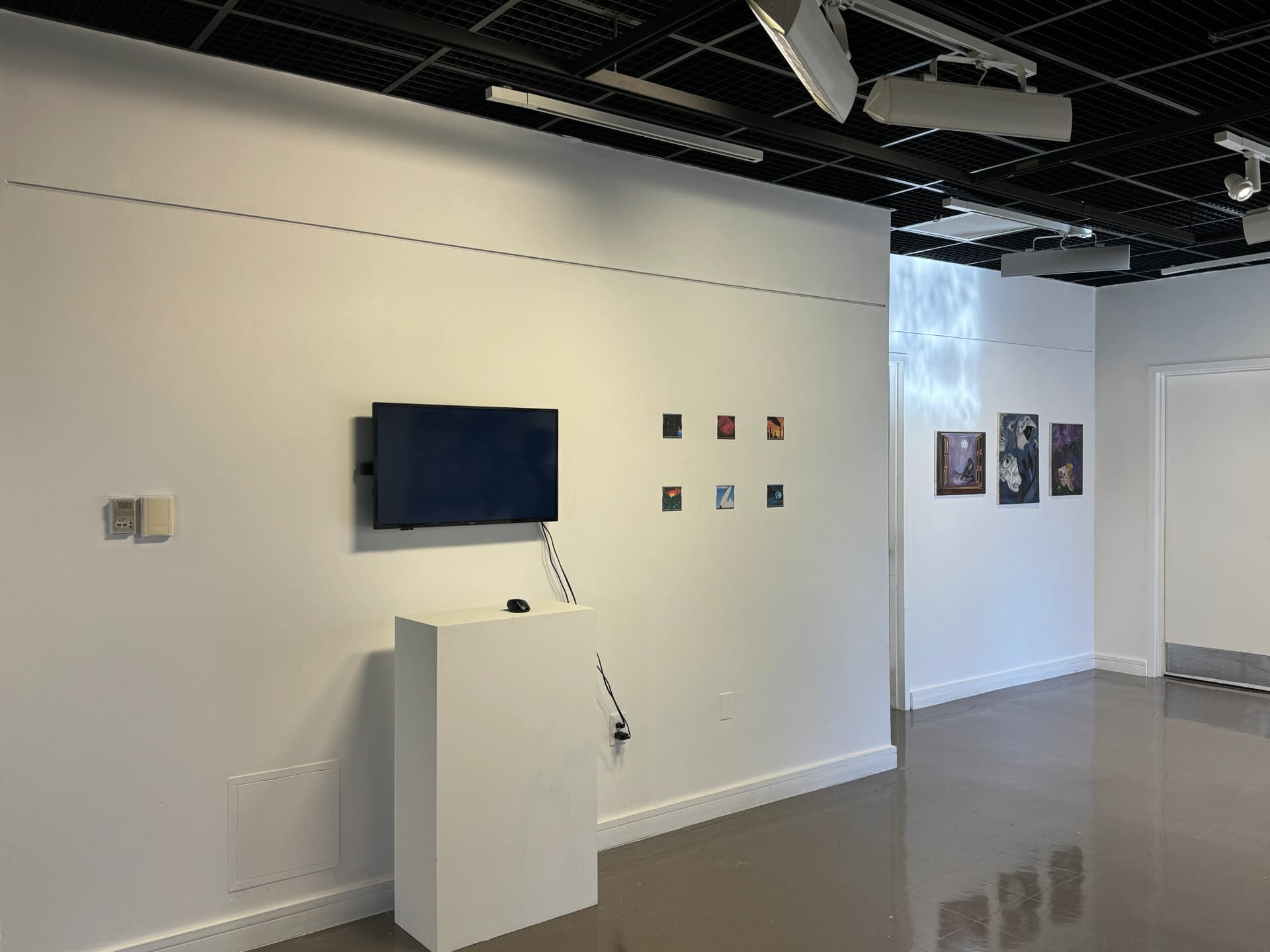
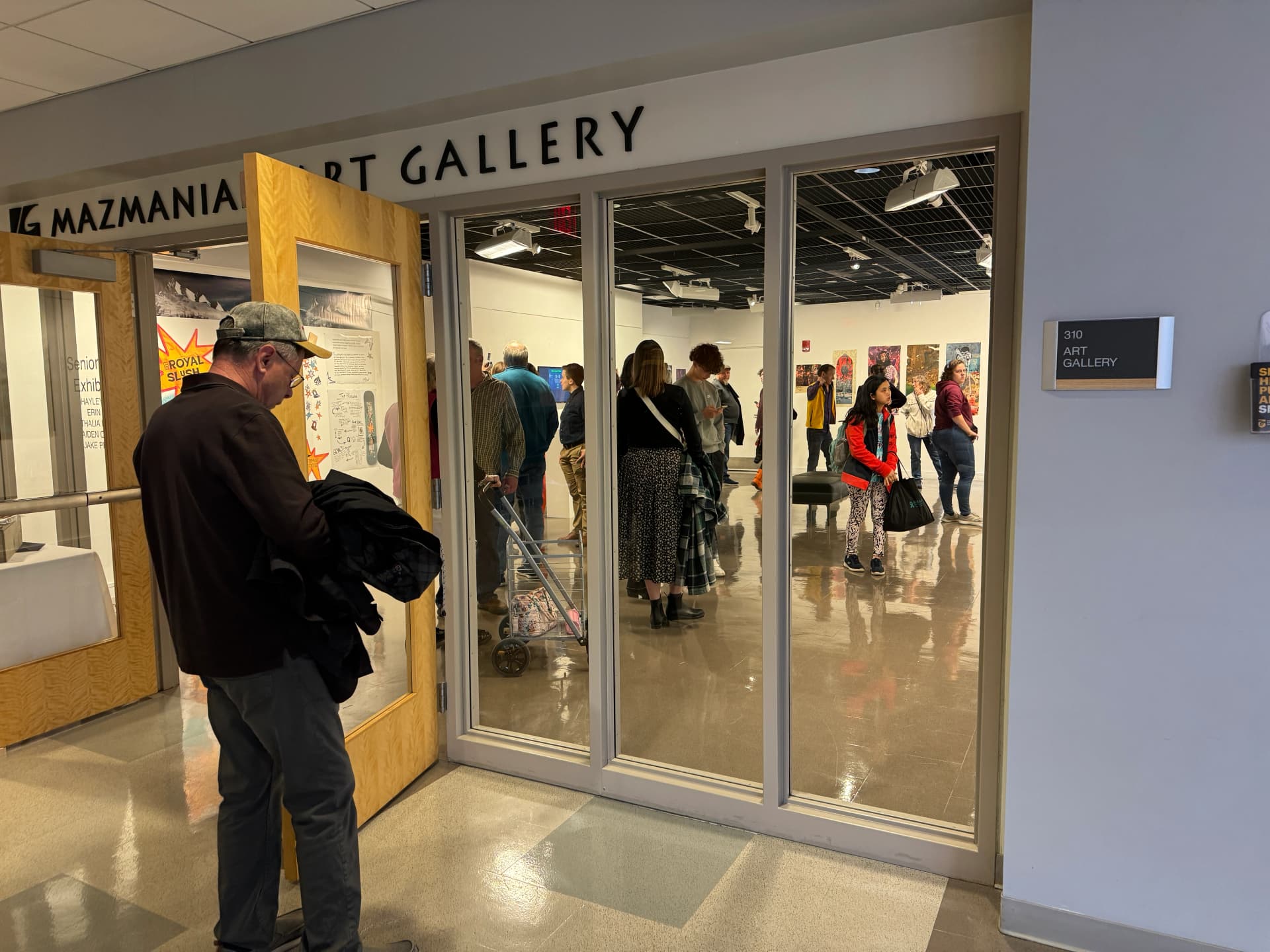
The exhibition opened April 20, 2024 at the Mazmanian Art Gallery on the Framingham State University campus. Since the website was the medium, I mounted a TV on the wall and set up a dedicated computer running the site in kiosk mode — locally hosted so that network reliability wasn't a factor. The computer was deliberately underpowered, which felt appropriate. I printed the images on my HP 8030 at home for a lo-fi treatment consistent with the work, and stuck them to the wall with tape.
The reception was April 23. The show was well received — I was interviewed by the school newspaper, though I was nervous about the attention. There were mixed reactions, which I expected: the work was made for a specific audience, and if you weren't initiated into that period of internet culture it probably seemed pretty weird. That was intentional.